
How Do I Stop My Dog Barking and Lunging? I’m a Reactivity Specialist - Here Are the Five Questions I’m Asked Most
If your dog barks, lunges or pulls towards other dogs, people, cyclists or passing cars, walks can quickly become stressful. You may worry about what other people think, wonder whether your dog is aggressive, or feel unsure about what to do in the moment.
As a dog reactivity specialist, these are some of the questions I'm asked most often. The good news is that reactivity can improve. With the right management, reward-based training and professional support where needed, many dogs learn to feel safer and cope more calmly.
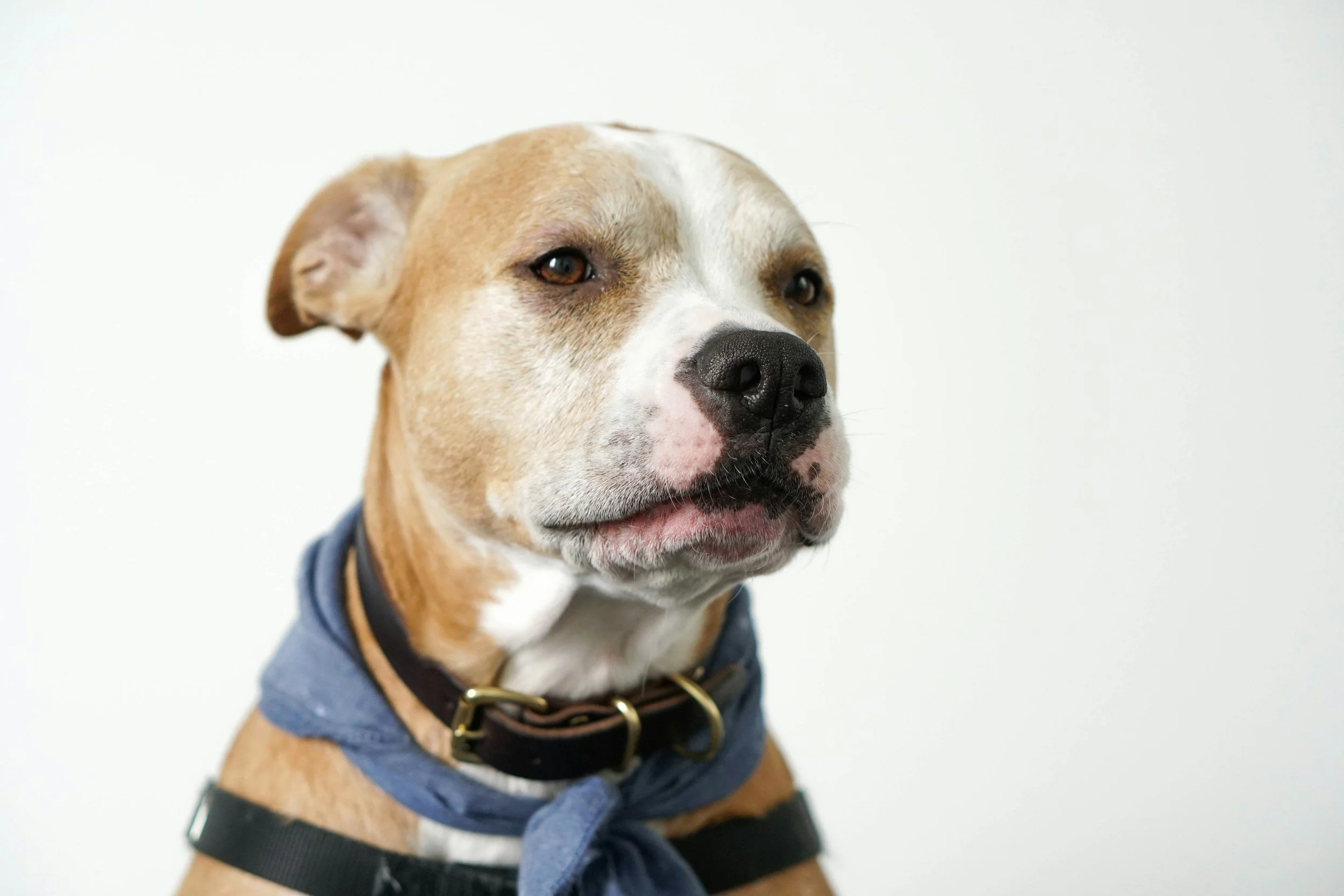
What does "reactive dog" mean?
A reactive dog has an intense response to a particular trigger. This could include:
Other dogs.
People or children.
Joggers, cyclists or scooters.
Cars and buses.
Cats, birds or squirrels.
Noises such as fireworks or motorbikes.
Visitors arriving at the home.
Dogs or people passing the garden.
Reactivity may look like barking, growling, lunging, pulling, whining, spinning, freezing, hiding or attempting to escape.
It is important to understand that reactivity is not automatically the same as aggression. Dogs may react because they feel worried, frustrated, excited or overwhelmed. Two dogs may both bark and lunge, but one may be frightened while the other is frustrated because they cannot greet the dog they can see.
The behaviour is your dog's way of communicating that they are struggling in that situation. Rather than asking, "How do I stop the barking?", it is often more helpful to ask, "What is my dog feeling, and how can I help them?"
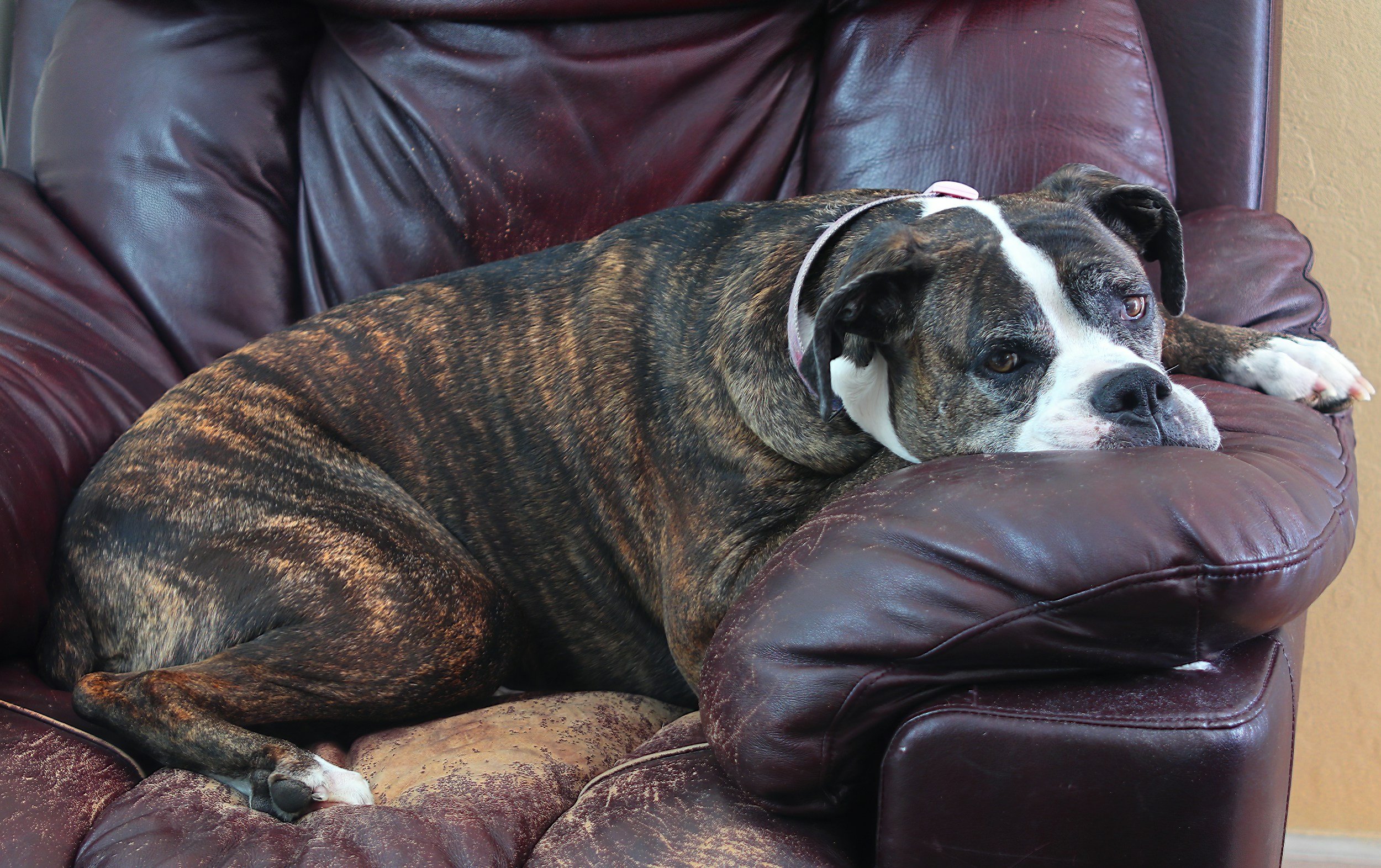
Look for the early signs
Most dogs show signs of discomfort before they reach the point of barking or lunging. These can include:
Looking away or avoiding eye contact.
Licking their lips or yawning.
Pulling their ears back.
Stiffening or freezing.
Staring intensely at the trigger.
Lowering their body.
Tucking their tail.
Panting when it is not hot.
Refusing food.
Hiding behind you or trying to move away.
Learning to recognise these early signals gives you an opportunity to help before your dog reacts.
Why is my dog barking and lunging?
Reactivity can have several causes, and it is not always possible to identify one specific reason. Common factors include fear, frustration, excitement, lack of appropriate socialisation, previous unpleasant experiences and pain or illness.
Fear and anxiety
Some dogs bark and lunge because they feel unsafe. The behaviour may cause the scary person or dog to move away, which teaches the dog that barking is an effective way to create distance.
This does not mean your dog is being deliberately difficult. From their perspective, the reaction has solved a problem.
Lead frustration
A dog may want to greet another dog, chase a cyclist or investigate something interesting but cannot because they are attached to a lead. The resulting frustration can appear as barking, pulling, jumping or spinning.
Overexcitement
Some dogs become overwhelmed when they see a trigger, particularly if they are already excited or have had a busy day. Their response may be driven by high arousal rather than fear.
Previous experiences
A frightening encounter, an intimidating dog, a painful incident or repeated stressful greetings can affect how your dog responds in the future. However, not every reactive dog has experienced a clear traumatic event. Some dogs are simply more sensitive by temperament.
Pain or medical problems
If your dog has suddenly become reactive, arrange a veterinary check. Pain, illness or changes in hearing, sight or mobility can affect behaviour. A dog that feels uncomfortable may have a lower tolerance for people, dogs or handling. It's worth involving your vet when behaviour changes or when you are concerned about your dog's welfare.
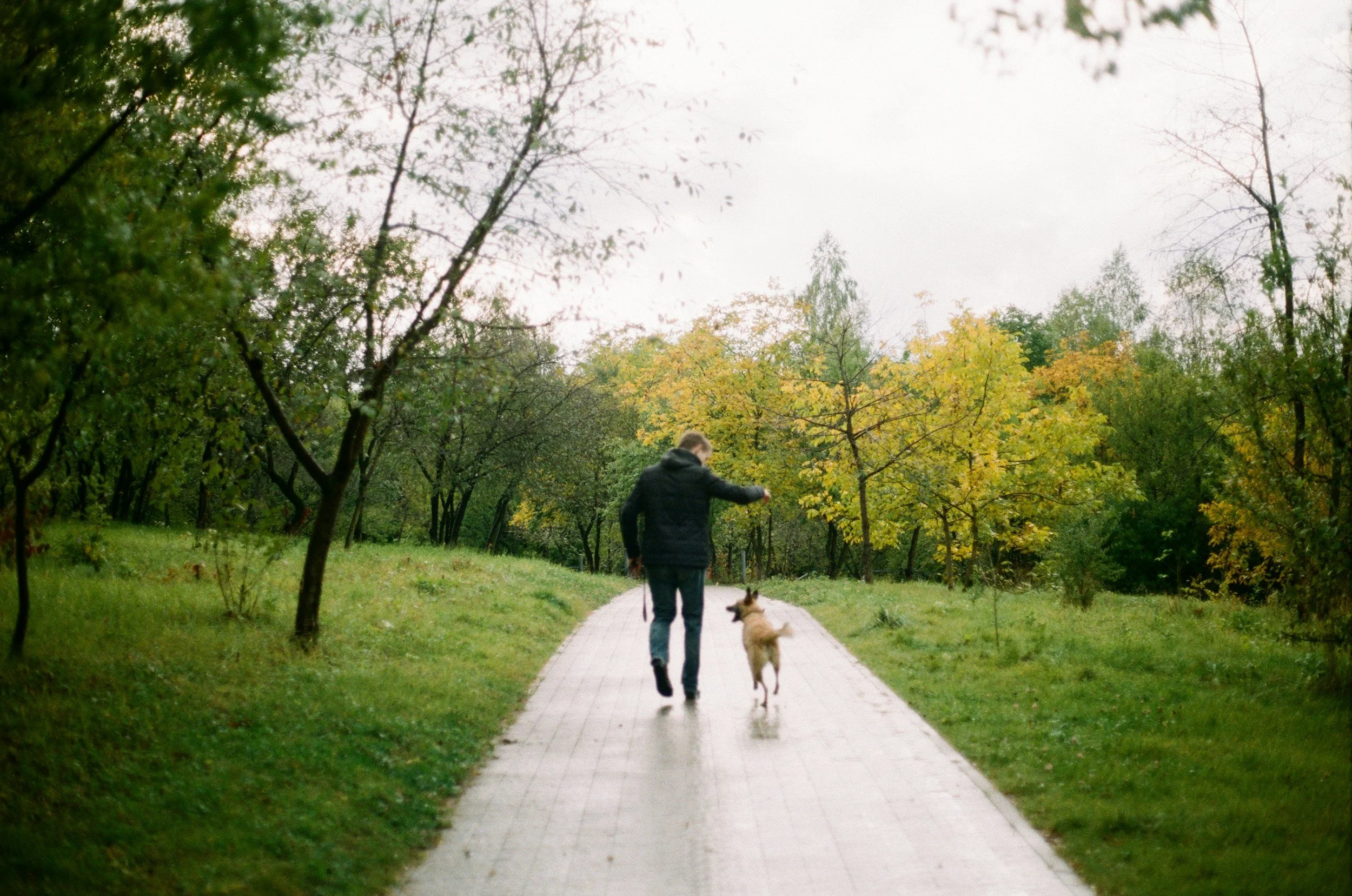
How do I stop my dog reacting on walks?
The first step is not to force your dog to walk past the trigger. The first step is to prevent them from becoming overwhelmed.
Create distance
Distance is one of the most useful tools when supporting a reactive dog. If you see another dog approaching, you could:
Cross the road.
Turn down a side street.
Walk behind a parked car.
Step into a driveway.
Move into a garden entrance.
Turn around and walk in the opposite direction.
Ask the other person to give you space.
Try to move away while your dog can still think, eat and respond to you. Once a dog is barking, lunging or unable to take food, they are usually too overwhelmed to learn effectively.
This is often described as staying "under threshold". Your dog can notice the trigger, but they are not yet in a full reaction.
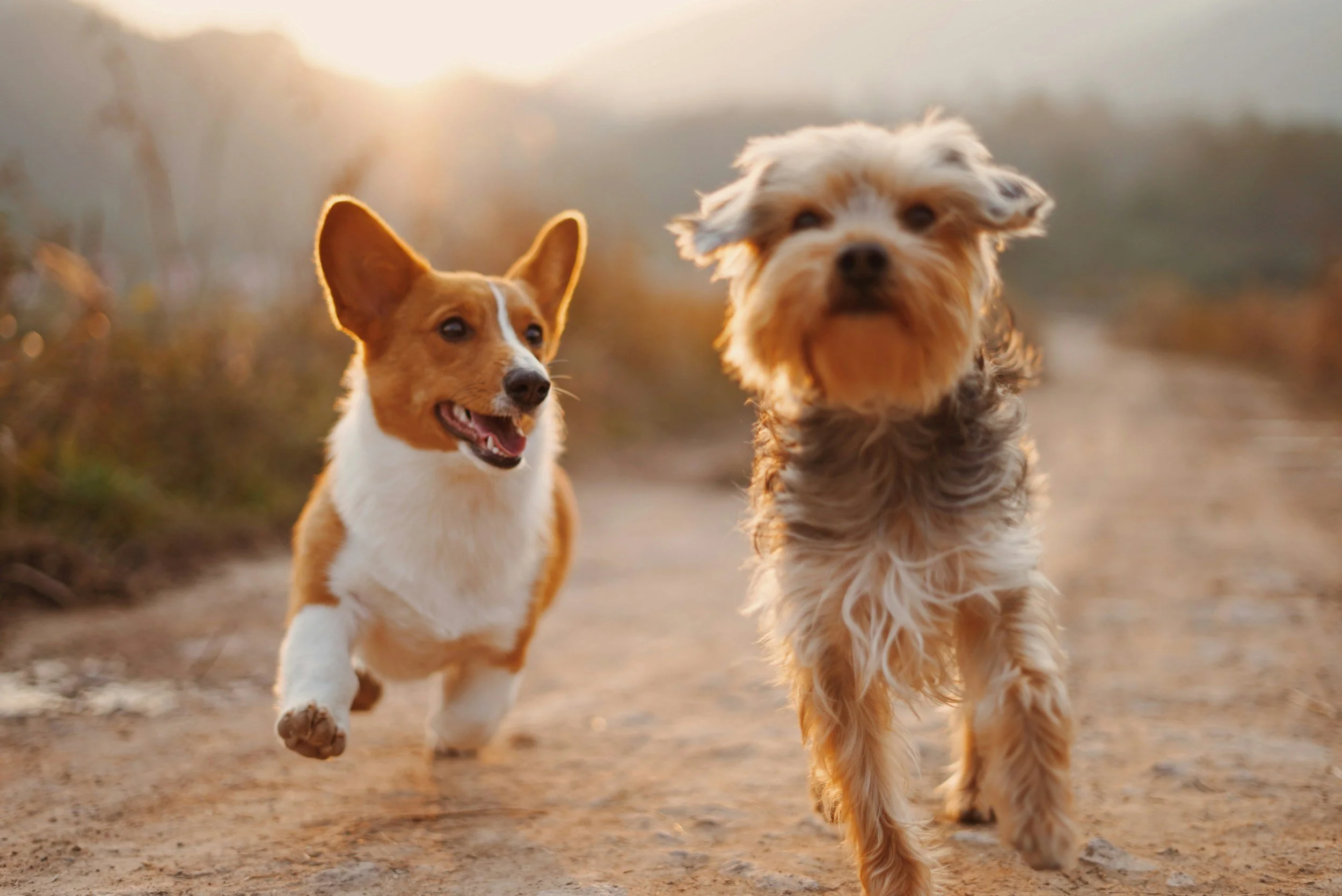
Reward calm observation
Take small, high-value treats on walks. When your dog sees a trigger and remains calm, mark the moment with a quiet "yes" and offer a treat.
You can reward your dog for:
Looking at the trigger and then looking away.
Looking back at you.
Walking beside you.
Sniffing the ground.
Choosing to move away.
Remaining relaxed while the trigger passes.
Responding to their name.
The reward should be delivered before the reaction whenever possible. You are teaching your dog that noticing a trigger calmly leads to something positive.
Reward-based training is widely recommended. Dogs are more likely to repeat behaviours that result in something they value, such as food, play or access to something they enjoy.
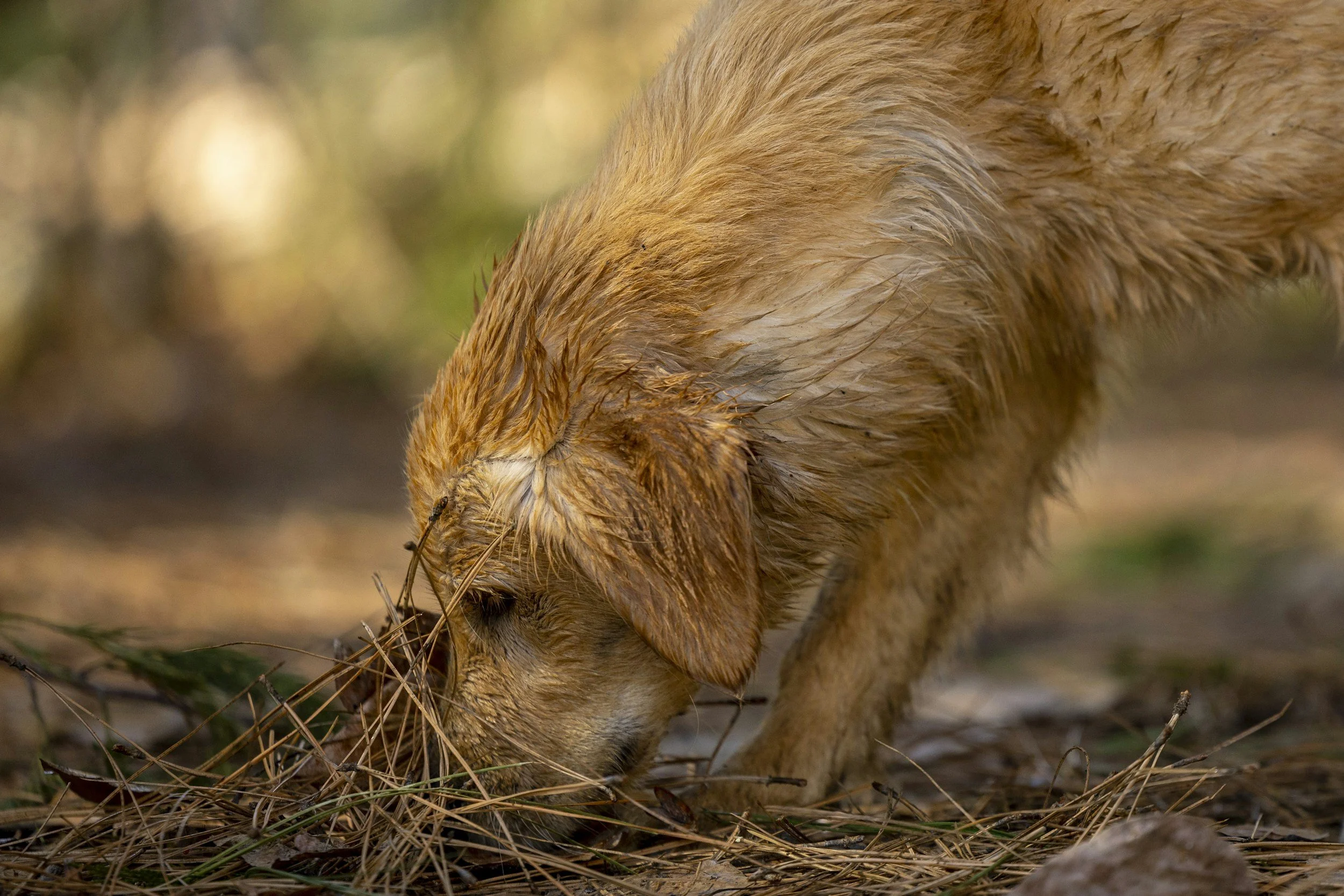
Teach a "find it" game
Practise this at home first. Say "find it" and scatter a few treats on the floor. When your dog immediately lowers their nose to search, practise in the garden and then in quiet outdoor areas.
On a walk, you can use "find it" when a trigger appears at a manageable distance. This gives your dog an alternative activity and may help you create space while they sniff for food.
Do not wait until your dog is already lunging to introduce the game. Practise it regularly in calm situations so it becomes familiar and rewarding.
Choose your walking environment carefully
A quiet walk in a familiar area may be more beneficial than a busy walk with repeated reactions. Look for:
Wide paths.
Good visibility.
Quiet times of day.
Open spaces where you can move away.
Areas with fewer off-lead dogs.
Secure enclosed fields if your dog needs safe off-lead exercise.
Exercise is important, but more is not always better. A long, stressful walk can leave your dog more overwhelmed rather than more settled. Mental enrichment, sniffing, training games and rest can all be valuable parts of your dog's routine.
Should I punish my dog for barking or lunging?

No. Telling your dog off, shouting, jerking the lead or using equipment designed to cause discomfort may stop the outward behaviour temporarily, but it does not address the emotion underneath it.
If your dog is frightened, punishment can make the person, dog or object seem even more threatening. If your dog is frustrated or overexcited, corrections may increase their arousal. There is also a risk that your dog stops giving quieter warning signals, such as growling, while still feeling distressed.
Instead:
Stay calm and create distance.
Avoid repeatedly saying "no".
Use a rehearsed cue such as "this way" or "find it".
Reward your dog when they disengage from the trigger.
End or simplify the walk if your dog has become overwhelmed.
Your dog is not barking to embarrass you. They are communicating that they are finding something difficult. Our job is to listen, make the situation safer and teach them alternative ways to cope.
Can my reactive dog learn to be calm around other dogs?
Many reactive dogs can improve, but the goal is not necessarily for your dog to greet every dog or play in a busy park.
For some dogs, success means calmly noticing another dog and continuing their walk. For others, it may mean walking near a familiar dog, attending a carefully managed class or relaxing in the same space as another dog.
Progress usually involves gradually changing how your dog feels about the trigger. When your dog sees another dog at a distance and remains calm, you pair that sight with something positive, such as food or play. Over time, the dog may begin to associate the trigger with good things rather than immediately expecting something frightening or frustrating.
This approach is commonly known as desensitisation and counter-conditioning. It needs to be gradual and carefully managed.
Signs the distance is appropriate
Your dog may be at a workable distance if they can:
Take treats.
Respond to their name.
Look at the trigger and then look away.
Sniff the ground.
Walk with a reasonably loose lead.
Recover quickly after the trigger has passed.
Signs the situation is too difficult
Increase the distance if your dog:
Refuses food.
Stares continuously.
Becomes stiff or freezes.
Whines, barks or growls.
Lunges or spins.
Cannot respond to familiar cues.
Takes a long time to recover.
Do not take your dog into a busy dog park to "get used to" other dogs. Forced exposure can make a dog's fear or frustration worse. Avoid situations that overwhelm dogs, and allow them space and choice.
What should I do if my dog is aggressive?
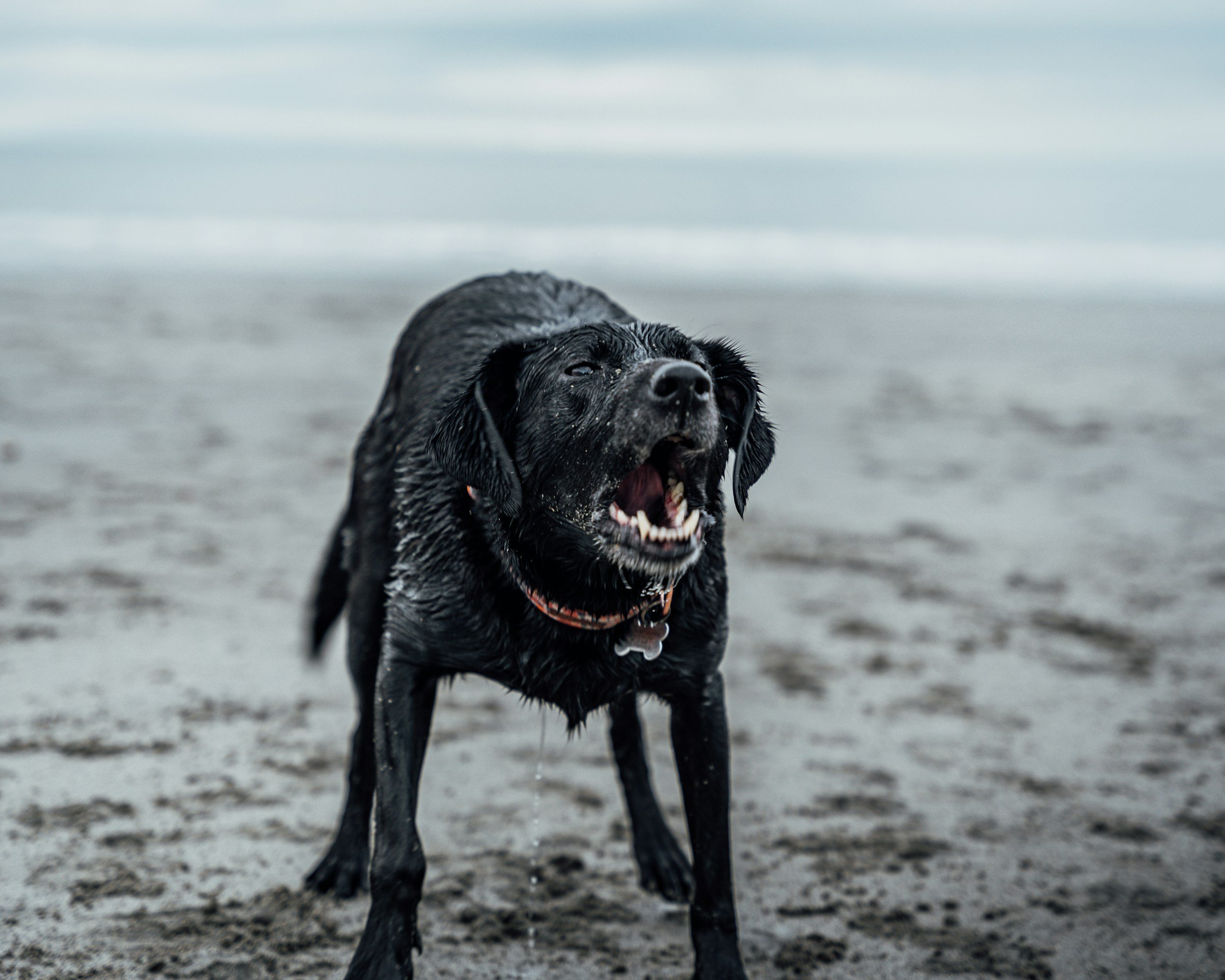
If your dog has bitten, made contact with someone or another animal, snapped repeatedly, or is difficult to control, seek professional help promptly.
Begin with your vet, particularly if the behaviour is new, worsening or associated with signs of pain. Your vet may recommend referral to a suitably qualified behaviour professional.
I’m a reactivity specialist, so you can get in contact with me for any concerns.
Make sure to:
Avoid known triggers wherever possible.
Use doors, stair gates or separate rooms at home.
Do not allow unfamiliar people to approach your dog.
Keep your dog on a lead in public spaces where appropriate.
Use a secure enclosed dog field for exercise if needed.
Supervise children and dogs closely.
Separate your dog during meals, chews or high-value activities.
Keep your dog's identification and microchip details up to date.
Consider reward-based muzzle training if there is a bite risk.
A basket muzzle can be a useful safety tool when introduced gradually and positively. It should allow your dog to pant, drink and take treats. However, a muzzle does not resolve the underlying problem and should be used alongside a behaviour plan.
UK owners should also be aware that a dog can be considered dangerously out of control under the Dangerous Dogs Act 1991, regardless of breed, so professional advice is especially important after an incident.
A simple plan for your next walk
Before leaving home, choose a quieter route and take high-value treats. Look ahead so you can spot triggers early.
When your dog notices a trigger, calmly create as much distance as possible. If your dog can still eat and respond, reward them for looking at the trigger and then returning their attention to you.
If they begin barking or lunging, avoid punishment. Move away calmly, use a visual barrier if possible and allow your dog time to recover. You may decide that the walk should end or move to a quieter area.
When you return home, provide rest and low-pressure enrichment. Sniffing, licking, chewing and sleeping can all help your dog settle after a challenging experience.
Remember that progress is not measured by how close your dog can get to a trigger. A successful walk may simply be one where your dog noticed another dog, stayed below threshold and came home able to relax.
Ready to help your reactive dog?
Reactivity is not a failure, it is often a sign that your dog is feeling fearful, frustrated, excited or overwhelmed. With the right support, many dogs can learn to cope more calmly.
If you would like personalised guidance, book a free dog reactivity consultation call. I offer one-to-one training in Colchester, Essex and surrounding areas, plus online Zoom training for clients anywhere in the UK or around the world.
Take the first step towards helping your dog feel safer and more confident. Book your free consultation call today.